

Makna creative – Aceh, known as the “Veranda of Mecca,” is not only rich in natural beauty and history but also boasts a vibrant tapestry of traditional crafts. Among these, traditional gold thread embroidery, locally known as “Kasab,” stands out as a testament to Aceh’s rich cultural heritage and creative economy. This intricate art form has been a cornerstone of Aceh’s creative industry, reflecting the region’s deep-rooted traditions and exceptional craftsmanship.
1. The Artistry Behind Traditional Gold Thread Embroidery in Aceh
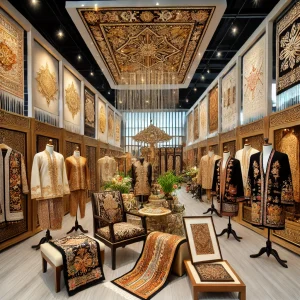
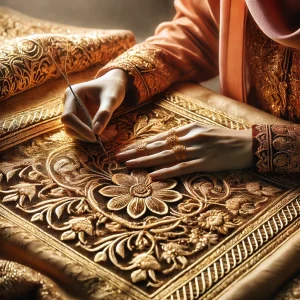
Kasab is a traditional Acehnese embroidery technique that involves stitching gold or silver threads onto velvet fabric, resulting in luxurious and intricate designs. Historically, this art was reserved for the nobility, symbolizing wealth and status. The motifs predominantly feature flora, aligning with Islamic principles that discourage depictions of living beings. This adherence to tradition showcases the meticulous craftsmanship inherent in Aceh’s artisans.
2. The Role of Kasab in Aceh’s Creative Economy
In recent years, Kasab has transcended its traditional confines, emerging as a significant contributor to Aceh’s creative economy. Artisans have adapted this traditional craft to produce a variety of products, including home décor items like curtains and pillowcases, as well as accessories such as traditional hats and umbrellas. This evolution has not only preserved the craft but also provided sustainable livelihoods for local communities.
3. The Cultural Significance of Aceh’s Handicrafts
Aceh’s handicrafts, particularly Kasab, are deeply intertwined with the region’s cultural identity. The use of gold thread in these embroideries is not merely decorative; it carries profound cultural meanings and is integral to various traditional ceremonies and rituals. Each motif and color used in Kasab holds specific symbolism, reflecting the values and beliefs of the Acehnese people.
4. The Evolution of Aceh’s Creative Industry
The creative industry in Aceh has seen a resurgence, with traditional crafts like Kasab gaining prominence both locally and internationally. This revival is a testament to the resilience and adaptability of Aceh’s artisans, who have embraced contemporary designs while preserving traditional techniques. The incorporation of Kasab into modern fashion and interior design has opened new markets, contributing to the region’s economic growth.
5. The Craftsmanship Behind Golden Thread Embroidery in Aceh
The process of creating Kasab is labor-intensive, requiring precision and patience. Artisans begin by sketching intricate motifs onto velvet fabric, followed by meticulously stitching gold or silver threads to bring the designs to life. This meticulous process can take weeks or even months, depending on the complexity of the design, highlighting the dedication and skill of Aceh’s craftsmen and women.
Other article : Explore the Fascinating World of Rencong Aceh
6. Kasab as a Pillar of Indonesian Handicrafts
Kasab holds a distinguished place among Indonesian handicrafts, representing the rich tapestry of the nation’s cultural diversity. Its intricate designs and luxurious appeal have captivated art enthusiasts and collectors worldwide, elevating Aceh’s status in the global handicraft market. This recognition has spurred initiatives to protect and promote traditional crafts, ensuring their continuity for future generations.
7. The Preservation of Traditional Acehnese Embroidery
Efforts to preserve traditional Acehnese embroidery have intensified, with educational programs and workshops aimed at transferring skills to younger generations. These initiatives are crucial in maintaining the authenticity of the craft while encouraging innovation. By blending traditional techniques with contemporary designs, artisans are keeping Kasab relevant in today’s fashion and décor industries.
8. The Economic Impact of Aceh’s Creative Economy Products
The diversification of Kasab products has significantly impacted Aceh’s economy. From bridal accessories to home décor, the demand for Kasab items has created employment opportunities and stimulated local markets. This economic boost has empowered communities, fostering a sense of pride and encouraging the preservation of cultural heritage.
9. Challenges and Opportunities in Aceh’s Handicrafts Sector
Despite its successes, the handicrafts sector in Aceh faces challenges, including competition from mass-produced goods and the need for market expansion. However, these challenges present opportunities for innovation. By leveraging digital platforms and e-commerce, artisans can reach a global audience, showcasing the uniqueness of Aceh’s craftsmanship and tapping into new markets.
10. The Future of Aceh’s Craftsmanship

The future of Aceh’s craftsmanship lies in the balance between preservation and innovation. By embracing modern trends while honoring traditional methods, artisans can ensure the sustainability of their crafts. Collaborations with designers and participation in international exhibitions can further elevate Aceh’s creative industry, securing its place on the global stage.
In conclusion, traditional gold thread embroidery in Aceh is more than an art form; it is a symbol of cultural identity and economic resilience. As Aceh continues to navigate the complexities of modernity and tradition, Kasab remains a shining example of the region’s creative economic wonders.